

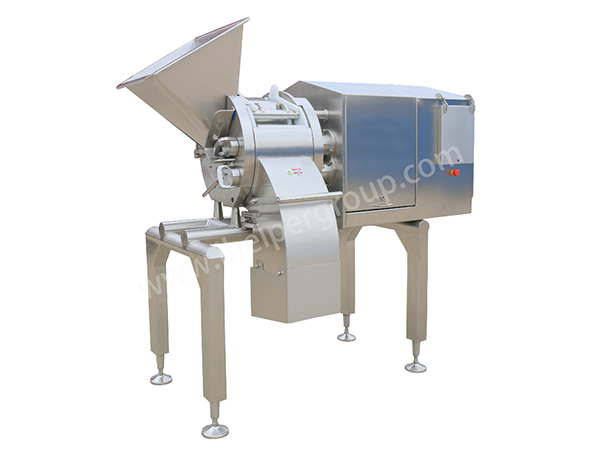
Blade misalignment of bone saw machine (such as deviation, derailment or improper installation) is a common fault, which can usually be inspected and repaired through the following steps. Be sure to disconnect the power supply before operation to ensure safety.
1. Check the installation direction of the saw blade
The saw blade is directional. It must be installed with the saw teeth facing the correct direction (usually downward or forward for cutting). If the blade is installed reversely, it will cause low cutting efficiency, abnormal noise and even machine damage. Refer to the equipment manual or observe the tooth profile of the saw blade to confirm the correct installation direction.
2. Adjust saw blade tension
Insufficient tension is the main cause of blade deviation and derailment. Measure with a tension meter (if available), or judge by experience: flick the saw blade gently by hand; it shall have obvious elasticity, neither too loose nor too tight.Too loose will cause blade swing; too tight will accelerate bearing wear or lead to blade breakage. Adjust to the standard tension in accordance with the manual requirements.
3. Inspect and adjust the guiding device
Guide block / Guide wheel: Check whether the guide block is worn, with excessive clearance (recommended clearance less than 0.05mm) or not parallel to the saw blade. Replace worn guide blocks; adjust or replace those with excessive clearance.
Guide arm: Ensure the spacing of the guide arm is appropriate, keep it as close to the workpiece as possible to provide sufficient support and prevent the saw blade from twisting during cutting.
4. Inspect saw wheels and bearings
Saw wheel: Check whether the upper and lower saw wheels are worn, deformed or attached with foreign matters on the surface. Uneven saw wheels will lead to unstable operation of the saw blade.
Bearing: Rotate the saw wheel manually and listen for abnormal noises (such as clicking or friction sound). If abnormal noise exists, the bearing may be worn and needs replacement.
5. Check verticality and stability of the saw frame
Under no-load condition, observe whether the saw blade keeps vertical movement when the saw frame moves up and down. If the saw frame jitters or is not vertical, there may be faults in the lifting mechanism, guide rail or oil cylinder (hydraulic type). It is necessary to exhaust air, replace worn parts or adjust the mechanism.
6. Inspect and clean the saw blade and machine
Saw blade: Check the saw blade for cracks, missing teeth or poor welding joints. Replace with a new saw blade immediately if any damage is found.
Machine: Clean sawdust and oil dirt on saw wheels and guiding devices, keep them clean to avoid blade operation obstruction caused by sundries.
If the misalignment problem cannot be solved by the above steps, or you are not familiar with the internal structure of the machine, it is recommended to contact professional maintenance personnel for inspection and repair to avoid further damage.