

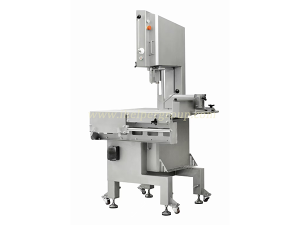
The causes of saw blade breakage on bone saw primarily involve multiple factors including equipment operation, saw blade selection and matching to working conditions, as well as mechanical status. Overall, these can be summarized as follows:
Improper operation: Excessive initial cutting angle or excessive force causes sudden impact forces exceeding the blade’s impact resistance; failure to maintain stable feed during cutting, resulting in wobbling, bouncing, or sudden pressure that distributes stress unevenly across the blade.
Saw blade mismatch with working conditions: The selected saw blade’s tooth profile, pitch, or material is unsuitable for the hardness and toughness of the material being cut (e.g., using a general-purpose saw blade for high-hardness bone), or the saw blade continues to be used beyond its wear limit.
Equipment and installation issues: Excessive or insufficient blade tension, worn or improperly spaced guide devices (e.g., guide blocks, guide arms), poor parallelism between the saw’s drive and idler wheels, or saw frame vibration can all cause unstable blade operation and lead to breakage.
Workpiece and Environmental Factors: Hard spots, impurities, or uneven bone density within the specimen causing sudden tooth obstruction; improper clamping allowing workpiece movement or impact during cutting; external vibration sources near the equipment affecting cutting stability.
Insufficient Maintenance and Care:
Inadequate or improperly selected cutting fluid flow leads to poor cooling and lubrication, causing saw blade overheating. Failure to promptly clear sawdust allows residue to accumulate in tooth gullets, intensifying friction and stress concentration.
To prevent saw blade breakage, it is recommended to select specialized saw blades based on bone characteristics, standardize operating procedures, conduct regular equipment inspections, and promptly replace worn components.