

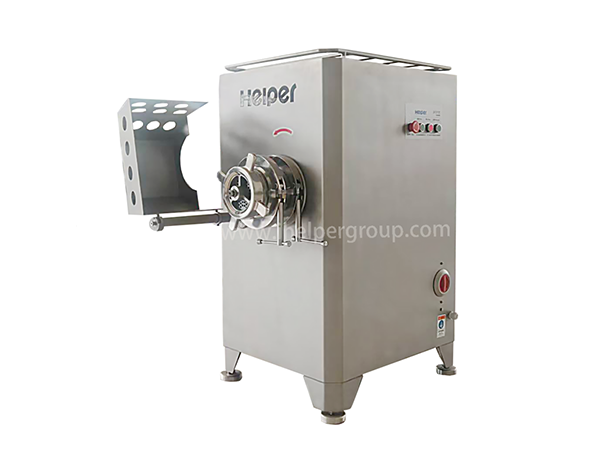
The processing capacity of an industrial meat grinder is not solely determined by motor speed; it is the combined effect of power output, mechanical structure, material properties and operating conditions.
Matching of Motor Power and Torque
Power determines continuous load capacity. High torque delivers more stable feeding performance than high rotational speed alone. Low speed paired with high torque can prevent material jamming and excessive meat temperature rise, usually achieving a higher effective meat output rate than models with high speed and low torque.
Design of Feeding Auger
The pitch, rotational speed and feeding compression depth of the auger directly govern the feeding speed. An auger with larger front pitch and smaller rear pitch optimizes extrusion efficiency. Mismatched feeding speed and cutting speed easily cause blockage at the cutting head, drastically reducing overall throughput.
Condition of Cutting Blades and Perforated Plate
Blade sharpness and the clearance between cutter head and perforated plate are critical factors. Dull blades or excessive clearance increase shearing resistance, which may slow down the motor or even stall it. The hole size of the perforated plate also directly affects single cutting volume and material passing speed.
Physical State of Raw Meat
Meat temperature and hardness exert significant influence. Frozen meat or overheated meat tends to melt fat that sticks to blades and breaks muscle fibers, cutting meat output by 10%–15%. The size of pre-cut meat chunks must fit the feed throat: oversized chunks cause jamming, while undersized chunks reduce pre-compression efficiency.
Transmission System Efficiency
Reduction ratio of gearboxes, belt slippage and bearing wear all consume power. Mechanical hysteresis or poor lubrication leads to delayed response of the industrial meat grinder, making the actual operating speed lower than the set value.