

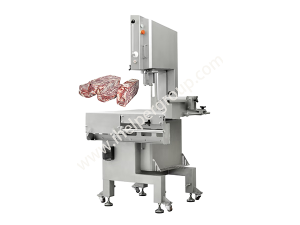
Meat mixer play a critical role in food processing. Their core function is to achieve the mixing, emulsification, and texture improvement of meat raw materials through mechanical agitation, thereby enhancing product quality and consistency. Depending on the processing technology and equipment type, their functions can be broken down into the following aspects:
Uniform Mixing and EmulsificationThoroughly and evenly mix minced meat, fat, ice water, and seasonings to ensure consistent ingredient distribution in each batch and avoid taste differences. Under specific processes, it can also emulsify meat into fine meat paste or meat emulsion, improving fineness and elasticity.
Extraction of Salt-Soluble Proteins and Formation of Gel NetworkThis is the key mechanism for producing high-quality meatballs. Through low-speed stirring and with the action of salt, salt-soluble proteins such as myosin and actin in muscle fibers are dissolved and released. These proteins form a viscous “slurry” and build a dense three-dimensional gel network when heated later, which provides the material basis for elasticity, crisp texture, and good water retention in meatballs.
Temperature Control for Quality and SafetyFrictional heat is generated during mixing. Low-speed mixers operate at low temperatures with ice water or crushed ice to effectively prevent premature protein denaturation and fat melting, preserving meat texture and juiciness. A low-temperature environment also inhibits microbial growth and ensures food safety.
Improved Water Retention and YieldAdequate stirring allows the protein network to better trap moisture and fat, significantly reducing juice loss during heating. This not only enhances tenderness and juiciness but also increases finished product weight and economic efficiency.
Enhanced Texture and MouthfeelStirring makes fillings viscous and elastic, and tenderizes meat fibers. Whether for meatballs, sausages, dumpling fillings, or meat patties, it creates a smoother, firmer texture rather than loose and dry.
Standardized ProductionMechanical stirring enables precise control over time, speed, and temperature, reducing human error and realizing large-scale, standardized production with stable batch-to-batch quality.
Meat mixers on the market are mainly divided into low-speed beater and bowl cutter based on working principles. Users can choose according to desired texture (e.g., grainy or finely emulsified) and production scale.