

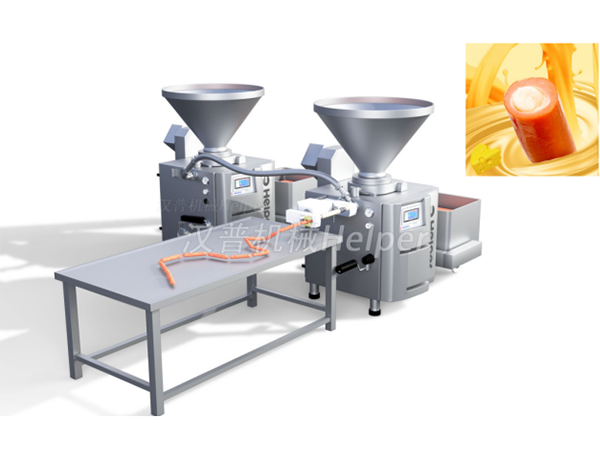
A sausage making machine is a professional mechanical system that realizes the full-process automatic processing of sausages, covering raw material processing, mixing, sausage stuffing, tying, cooking and cooling. Its core equipment includes meat cutters, mixers, sausage stuffers, clipping machines, smoking furnaces and continuous cooking lines. By precisely controlling key parameters such as material ratio, filling density and heat treatment curve, these devices ensure uniform texture, stable flavor and food safety of sausage products. Based on rheology, heat conduction and automatic control technology in food engineering, such equipment is widely adopted in meat product processing lines and serves as a crucial support for modern industrial meat production.
In practical operation, equipment operation must strictly comply with standard operating procedures. Before startup, inspect the airtightness, lubrication condition of transmission parts and safety interlock devices. During operation, monitor fluctuations in parameters including current, pressure and temperature, and adjust filling speed or thermal processing curve in a timely manner. Thorough cleaning and routine inspection of key components are mandatory after shutdown. For instance, the clearance of chopping blades shall be calibrated regularly to avoid impaired emulsification effect. Clogged stuffing nozzles shall be disassembled and cleaned promptly to prevent bacterial growth from residual materials. Professional skill training for operators and standardized management of equipment operation logs are fundamental to sustained and stable production.
Maintenance of sausage making machines is essential for extending equipment service life and guaranteeing food safety. A preventive maintenance plan shall consist of daily cleaning, weekly lubrication, monthly transmission system inspection and annual overhaul. Key maintenance items include vacuum pump oil replacement, scale removal of heating plates, sensor calibration and PLC program backup. Meanwhile, an inventory management system for spare parts shall be established, and vulnerable parts such as sealing rings, nozzles and blades shall be replaced on a regular basis. Condition monitoring technologies (such as vibration analysis and infrared temperature measurement) can achieve early fault warning and reduce the risk of unplanned downtime.